
A beautiful image showing close up detail of a penny farthing bicycle, Oamaru New Zealand.
The penny-farthing, also known as a high wheel, high wheeler and ordinary, is a type of bicycle with a large front wheel and a much smaller rear wheel. It was popular after the boneshaker until the development of the safety bicycle in the 1880s. It was the first machine to be called a "bicycle".
Although the name "penny-farthing" is now the most common, it was probably not used until the machines were nearly outdated; the first recorded print reference is from 1891 in Bicycling News. It comes from the British penny and farthing coins, one much larger than the other, so that the side view resembles a penny leading a farthing. For most of their reign, they were simply known as "bicycles". In the late 1890s, the name "ordinary" began to be used, to distinguish them from the emerging safety bicycles; this term and "hi-wheel" (and variants) are preferred by many modern enthusiasts.
In 1869, Eugène Meyer, a Frenchman, invented the High-Bicycle design and fashioned the wire-spoke tension wheel. Around 1870, English inventor James Starley, described as the father of the bicycle industry, and others, began producing bicycles based on the French boneshaker but with front wheels of increasing size, because larger front wheels, up to 1.5 m (60 in) in diameter, enabled higher speeds on bicycles limited to direct drive. In 1878, Albert Pope began manufacturing the Columbia bicycle outside of Boston, starting their two-decade heyday in America.
Although the trend was short-lived, the penny-farthing became a symbol of the late Victorian era. Its popularity also coincided with the birth of cycling as a sport. (source Wikipedia)
Oamaru Breakwater is all that stands between the harbour and the roaring sees of the south Pacific ocean.
Storms bring huge waves breaking over the stone sides, sometimes, at high tide, the breakwater can disappear completely under the waves, so take care if you want to capture a photo yourself!
Check out the history of the Breakwater here.
Holmes Wharf, a digitally painted art piece shows the lights at night stretching along the length of Holmes Wharf heading towards the Breakwater

Oamaru has a unique landscape that produces the most amazing clouds many times throughout the year.
Here the Anglican Church of St Lukes cuts a black silhouette against the early evening sky.

A break in heavy fog lights up a wave from a distant sunrise at the Oamru Breakwater, Oamaru Harbour.
Captured at 1/1600th of a second the water appears to shatter like glass against the stone.

A Digital artwork showing the beautiful Oamaru Harbour at sunset, the boats still lit by the setting sun.

Oamaru panoramic silhouette, a digital painting by Derek Golding. Several variations exist for this image; check our gallery for more.
Stand at the end of Holmes Wharf as the sun sets and watch the sea mist drift into the little town of Oamaru.
Waitaki skies are some of the most beautiful in the world, the Oamaru skyline is seen here cutting deep into the twilight sky.
Digital artwork showing the amazing layers the slight mist and dusk created.
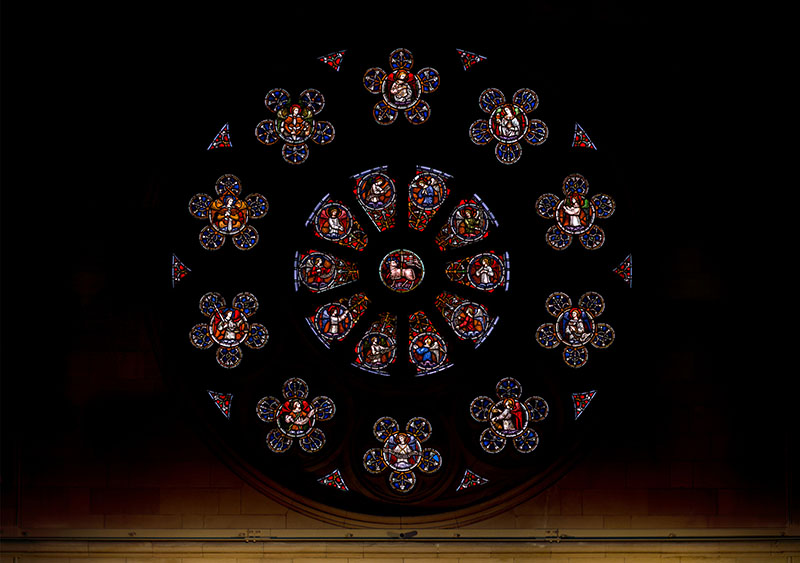
In 2008 Derek archived the entire collection of Stained Glass in Christchurch Cathedral. Powerful lenses were used to capture every detail of the windows. A cherry picker was used to gain access to a perfect viewpoint for the Rose window - eye level with the center. Over 300 10mp images were stitched together to create the final complete Rose Window.
Sadly, the Rose Window of Christchurch Cathedral was destroyed in the 2011 earthquake.
The Rose Window photograph was used in the creation of the Cardboard Transitional Cathedral designed by Shigeru Ban.
In 2008 Derek archived the entire collection of Stained Glass in Christchurch Cathedral. Powerful lenses were used to capture every detail of the windows. A cherry picker was used to gain access to a perfect viewpoint for the Rose window - eye level with the center. Over 300 10mp images were stitched together to create the final complete Rose Window.
Sadly, the Rose Window of Christchurch Cathedral was destroyed in the 2011 earthquake.
The Rose Window photograph was used in the creation of the Cardboard Transitional Cathedral designed by Shigeru Ban.
Here we have detail from the Rose window showing the beautiful stained glass.
The Lindis Pass, beautiful mountains rise above the thin ribbon of a road stretching out on it's journey into the distance.
Digitally painted by Derek Golding, the beautiful warm colours will compliment any room.
A break in heavy fog lights up a wave from a distant sunrise at the Oamru Breakwater, Oamaru Harbour.
Captured at 1/1600th of a second the water appears to shatter like glass against the stone.
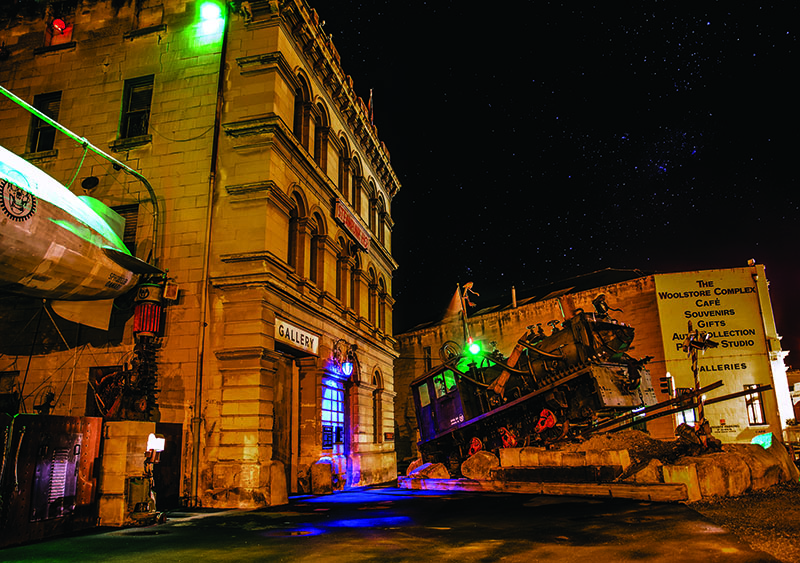
Steampunk HQ in Oamaru is a major draw card to thousands of visitors a year, yet at night, it is the domain of the penguin!
Well worth a visit at night, as is all the Harbour Precinct area
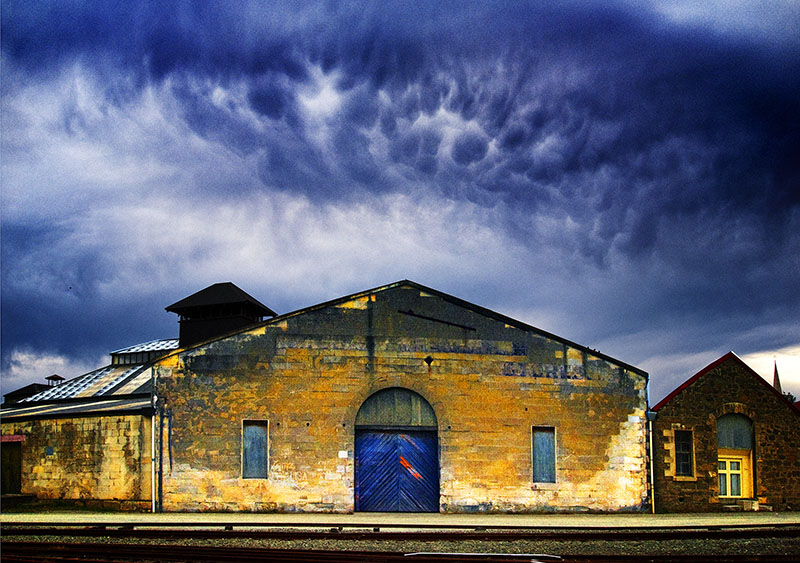
Being close to the sea and a landmass like the cape provides the artist with some stunning cloud formations.
Here we see Mammatus clouds billowing up above the rear facade of a building on Harbour street.
Steampunk HQ is located in the former Meeks Grain Elevator Building, a historic building registered with by the New Zealand Historic Places Trust as a Category II structure.
This massive and handsomely detailed grain store built in 1882 for the country’s then largest stock and station agency, the New Zealand Loan and Mercantile Agency Company Ltd (NZLMA), is a landmark building in the Oamaru’s Whitestone heritage precinct. More info via the Historic Places Trust available here
The Church of the Good Shepherd, Tekapo, is a must do for all astrophotographers.
The Mackenzie Basin offers some of the clearest night skies in the world and achieved status as the world biggest and best Dark Sky Reserve in 2012.
This image shows the Church with our own Galaxy, the Milky Way, rising to the east.







GoldingArts
Be sure to follow our social pages for offers and updates.
Popular products
Featured products
-
 Moraki Hatching
Price range: $132.30 through $456.30
Moraki Hatching
Price range: $132.30 through $456.30 -
The Lights
Price range: $132.30 through $456.30
-
The Night Train
Price range: $105.30 through $456.30


© 2007 - 2026 • GoldingArts • All Rights Reserved • Privacy Policy • Terms and Conditions