
Taken April 2009, this is the eastern side of a large panorama showing storm squalls moving across Christchurch into the sea with beautiful clouds forming above Pegasus Bay. Be sure to check out the western side of this panorama.
Taken April 2009, this is the western side of a large panorama showing storm squalls moving across Christchurch into the sea. Be sure to check out the eastern side of this panorama with beautiful clouds forming above Pegasus Bay.

Before the storm the boats lay still in Oamaru Harbour.
A digitally painted piece showing the dramatic clouds minutes before sunset in this beautiful location.
European settlement at Oamaru began in 1853 when Hugh Robison built a musterer’s hut on the foreshore. North Otago was good for sheep-runs, and in the 1860s the town grew rich servicing pastoralists and gold miners.
Oamaru, though, was no port. Cape Wanbrow, a stubby little headland, gave some shelter from southerly winds but none from easterlies. In the absence of breakwaters and wharves, ships anchored in the open sea, loading and discharging cargo into surf boats. It was slow, sweaty work.
It was also dangerous. Cables guided the surf boats through the breakers in a hair-raising surge of foam. Once on the beach, the boat crews sledged them up to a cargo shed. Passengers received similar treatment. As the boats approached the beach, boatmen waded out, took the passengers on their backs and carried them ashore.
This was possible only in fine, calm weather. Ships’ captains kept a weather eye on the horizon. At the first sign of danger or a shift in the wind, work stopped and they fled out to sea.
Oamaru’s exposed beach made it one of New Zealand’s most dangerous anchorages. More than 20 ships were wrecked there between 1860 and 1875, and many more were damaged and recovered. In the worst example, on the night of 3–4 February 1868, a huge storm wrecked a new jetty foolishly built out into the bay from an unprotected site, as well as the ships Star of Tasmania, Water Nymph and Otago. Four people drowned.
'Oamaru Harbour', URL: https://nzhistory.govt.nz/culture/oamaru-harbour, (Ministry for Culture and Heritage), updated 20-Dec-2012
Looking across the plains to snow capped mountains looming above Christchurch City, we see a very cold start to the day. Smoke from the fires can't quite make it into the sky so hung around between the trees and buildings, hoping to warm as the dawn slinks into the past.
Be sure to check out this panoramas sister print - Plains of Mist and Fog - West
Looking across the plains to snow capped mountains looming above Christchurch City, we see a very cold start to the day. Smoke from the fires can't quite make it into the sky so hung around between the trees and buildings, hoping to warm as the dawn slinks into the past.
Be sure to check out this panoramas sister print - Plains of Mist and Fog - East

"That Wanaka Tree", an iconic spot that is photographed by thousands of tourists every year.
This artwork is digitally painted, showing the tree and the distant mountains awaiting a spring storm.

Boaties skip across the Avon Heathcote estuary, Christchurch, with a winter storm looming on the background. Light breaks through the dark clouds in the distance.
A break in heavy fog lights up a wave from a distant sunrise at the Oamru Breakwater, Oamaru Harbour.
Captured at 1/1600th of a second the water appears to shatter like glass against the stone.

Being close to the sea and a landmass like the cape provides the artist with some stunning cloud formations.
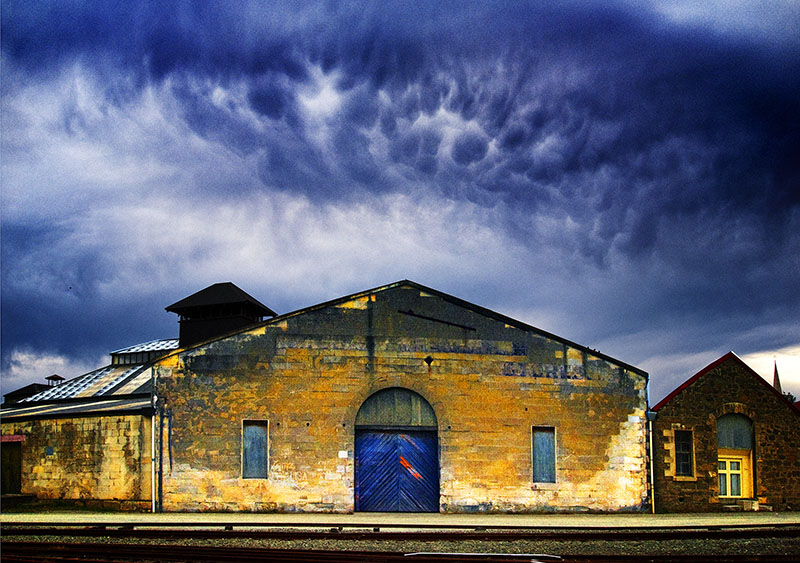
Here we see Mammatus clouds billowing up above the rear facade of a building on Harbour street.
From the car park at the Crown Range road you can sometimes watch aircraft carrying passengers to Queenstown fly below you, coming in to land.




GoldingArts
Be sure to follow our social pages for offers and updates.
Popular products
Featured products
-
 Pier Number 8
Price range: $132.30 through $456.30
Pier Number 8
Price range: $132.30 through $456.30 -
 The Luminous Wave III
Price range: $132.30 through $456.30
The Luminous Wave III
Price range: $132.30 through $456.30 -
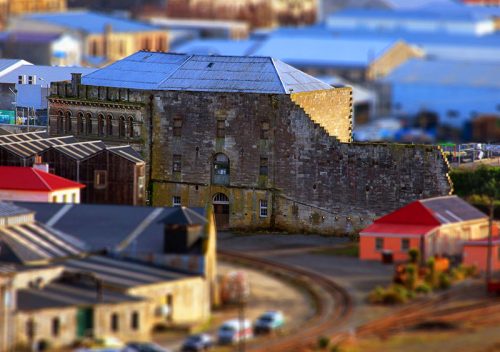
Toy Town Oamaru - Steampunk HQ


© 2007 - 2026 • GoldingArts • All Rights Reserved • Privacy Policy • Terms and Conditions