
A frosty sunrise, the details highlighted by the smog of household fires from the night before. 28th July 2007

A beautiful image showing close up detail of a penny farthing bicycle, Oamaru New Zealand.
The penny-farthing, also known as a high wheel, high wheeler and ordinary, is a type of bicycle with a large front wheel and a much smaller rear wheel. It was popular after the boneshaker until the development of the safety bicycle in the 1880s. It was the first machine to be called a "bicycle".
Although the name "penny-farthing" is now the most common, it was probably not used until the machines were nearly outdated; the first recorded print reference is from 1891 in Bicycling News. It comes from the British penny and farthing coins, one much larger than the other, so that the side view resembles a penny leading a farthing. For most of their reign, they were simply known as "bicycles". In the late 1890s, the name "ordinary" began to be used, to distinguish them from the emerging safety bicycles; this term and "hi-wheel" (and variants) are preferred by many modern enthusiasts.
In 1869, Eugène Meyer, a Frenchman, invented the High-Bicycle design and fashioned the wire-spoke tension wheel. Around 1870, English inventor James Starley, described as the father of the bicycle industry, and others, began producing bicycles based on the French boneshaker but with front wheels of increasing size, because larger front wheels, up to 1.5 m (60 in) in diameter, enabled higher speeds on bicycles limited to direct drive. In 1878, Albert Pope began manufacturing the Columbia bicycle outside of Boston, starting their two-decade heyday in America.
Although the trend was short-lived, the penny-farthing became a symbol of the late Victorian era. Its popularity also coincided with the birth of cycling as a sport. (source Wikipedia)

Before the storm the boats lay still in Oamaru Harbour.
A digitally painted piece showing the dramatic clouds minutes before sunset in this beautiful location.
European settlement at Oamaru began in 1853 when Hugh Robison built a musterer’s hut on the foreshore. North Otago was good for sheep-runs, and in the 1860s the town grew rich servicing pastoralists and gold miners.
Oamaru, though, was no port. Cape Wanbrow, a stubby little headland, gave some shelter from southerly winds but none from easterlies. In the absence of breakwaters and wharves, ships anchored in the open sea, loading and discharging cargo into surf boats. It was slow, sweaty work.
It was also dangerous. Cables guided the surf boats through the breakers in a hair-raising surge of foam. Once on the beach, the boat crews sledged them up to a cargo shed. Passengers received similar treatment. As the boats approached the beach, boatmen waded out, took the passengers on their backs and carried them ashore.
This was possible only in fine, calm weather. Ships’ captains kept a weather eye on the horizon. At the first sign of danger or a shift in the wind, work stopped and they fled out to sea.
Oamaru’s exposed beach made it one of New Zealand’s most dangerous anchorages. More than 20 ships were wrecked there between 1860 and 1875, and many more were damaged and recovered. In the worst example, on the night of 3–4 February 1868, a huge storm wrecked a new jetty foolishly built out into the bay from an unprotected site, as well as the ships Star of Tasmania, Water Nymph and Otago. Four people drowned.
'Oamaru Harbour', URL: https://nzhistory.govt.nz/culture/oamaru-harbour, (Ministry for Culture and Heritage), updated 20-Dec-2012
Behind the hustle and bustle of Harbour street lies a quieter place, sometimes dark.

March is the month for rainbows in Oamaru.
Here we see a beautiful example rising above Oamaru Harbour, reflected light from the clouds lighting the green waters below.
Oamaru Breakwater is all that stands between the harbour and the roaring sees of the south Pacific ocean.
Storms bring huge waves breaking over the stone sides, sometimes, at high tide, the breakwater can disappear completely under the waves, so take care if you want to capture a photo yourself!
Check out the history of the Breakwater here.

Below Benmore Dam, Waitaki, willow trees grow. A digital painting by Derek Golding.
Benmore Dam is the largest dam within the Waitaki power scheme, located in the New Zealand's South Island. There are eight other power stations in the Waitaki Power Scheme.
The dam is the largest earth-filled water-retaining structure in New Zealand. Its core is low permeability clay material, supported by two massive shoulders of river gravel. Lake Benmore has a volume of 1.25 billion cubic metres, about 1.5 times as much water as Wellington Harbour. The dam's spillway can cope with 3,400 cubic metres of water per second, about 10 times the mean river flow.
Oamaru's beautiful stone buildings are miniature worlds, each wall is inhabited by flora and fauna that started to colonize the rock as soon as the blade cut and the face was open to the elements.
Here we have the side of Steampunk HQ, moss and plants flow along the lines of moisture created by old and damaged spouting.

GoldingArts Fine Art cards are printed onto photographic paper, the cards hand made and inspected before being sealed in a protective envelope. Perfect for framing.
The canvas has string attached and ready to hang. Semi-gloss finish with super vibrant colours.
240gsm synthetic Canvas creates crisp lines and a sharp image.
32mm deep. Kiln dried, renewable NZ radiata pine prevents warping.
Canvases are easily cleaned with a damp cloth.
Harbour Street, Oamaru, is a quite place at night, the silence only broken by the chatter of the little penguins that live under the buildings.
If you walk these streets after midnight, be aware you are being watched. Ghosts inhabit these streets, denizens of a long lost past walk in the space between worlds.
A Shipweck close to the coast of Oamaru in the late 1800's caused the loss of all lives, or so it was believed. For weeks after tales of a strange creature with huge teeth and a scream that struck the heart of the bravest man were whispered around the town. On stormy nights, the scream can still be heard.
Harbour Street, Oamaru, is a quite place at night, the silence only broken by the chatter of the little penguins that live under the buildings.
If you walk these streets after midnight, be aware you are being watched. Ghosts inhabit these streets, denizens of a long lost past walk in the space between worlds.
On the old railway bridge you may catch a glimpse of the Drowned Bride, a sad young figure who, after being spurned by her lover, cast herself into the sea. She lingers now at this vantage point, vainly waiting to catch a glipse of the man she loves.
Holmes Wharf, a digitally painted art piece shows the lights at night stretching along the length of Holmes Wharf heading towards the Breakwater
Oamaru Breakwater and Holmes Wharf, slow exposure, 25th May 2009.
A curious place to be at night with all the penguins, rabbits and seabirds hustling around you, getting ready to settle down.
Oamaru's first post office was built in 1864 to a design by William Mason and William Clayton. The building now houses the Waitaki District Council. More information about this beautiful building can be found on Wikipedia

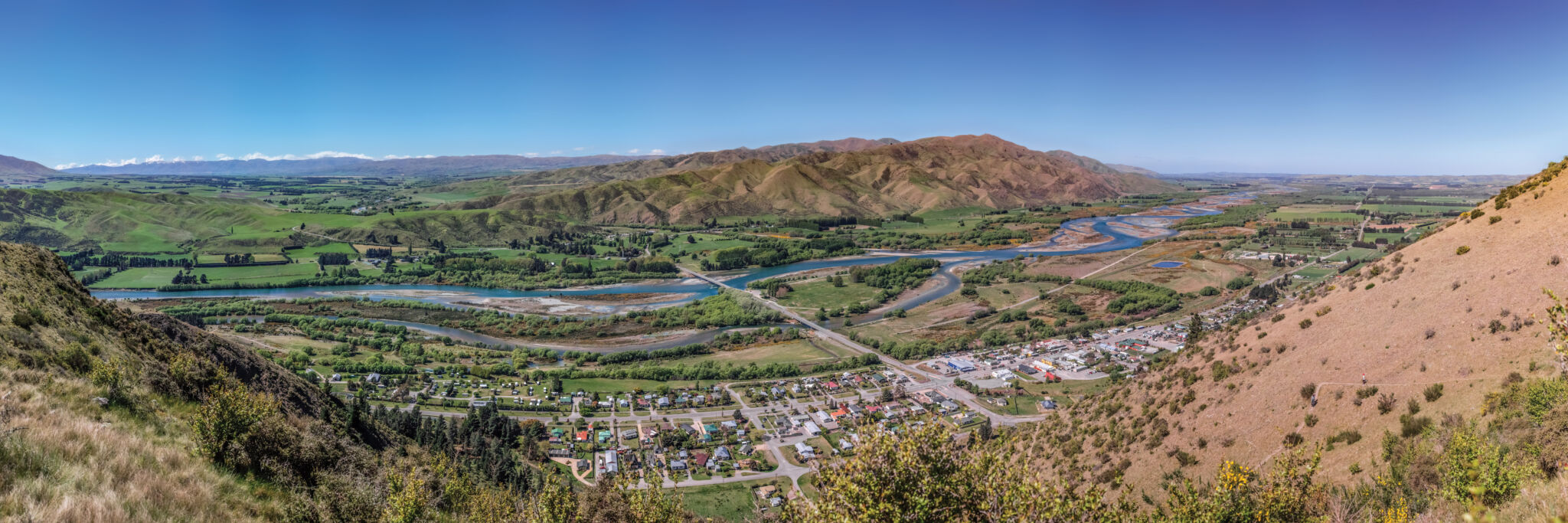
This panoramic shows the Waitaki Valley from above Kurow township. A path leads to this point from the road below. At the top you will see this image on a sign that shows all the mountain names in the distance.
Below we can see the A2O bike trail, used by over 60,000 visitors a year.
Check out a tour at Virtual Waitaki, showing this location and many others along the valley, or click on the box below to explore.
Oamaru has a unique landscape that produces the most amazing clouds many times throughout the year.
Here the Anglican Church of St Lukes cuts a black silhouette against the early evening sky.
The Lindis Pass is a stunning route to take on a trip around the South Island of New Zealand. A true spot for "4 Seasons in One Day", even in summer touches of snow can appear when a cold front moves through.
The Lindis Pass is a stunning route to take on a trip around the South Island of New Zealand. A true spot for "4 Seasons in One Day", even in summer touches of snow can appear when a cold front moves through.
Panoramic image with red filter applied to darken the skies.
A break in heavy fog lights up a wave from a distant sunrise at the Oamru Breakwater, Oamaru Harbour.
Captured at 1/1600th of a second the water appears to shatter like glass against the stone.





GoldingArts
Be sure to follow our social pages for offers and updates.
Popular products
Featured products
-
 Pier Number 8
Price range: $132.30 through $456.30
Pier Number 8
Price range: $132.30 through $456.30 -
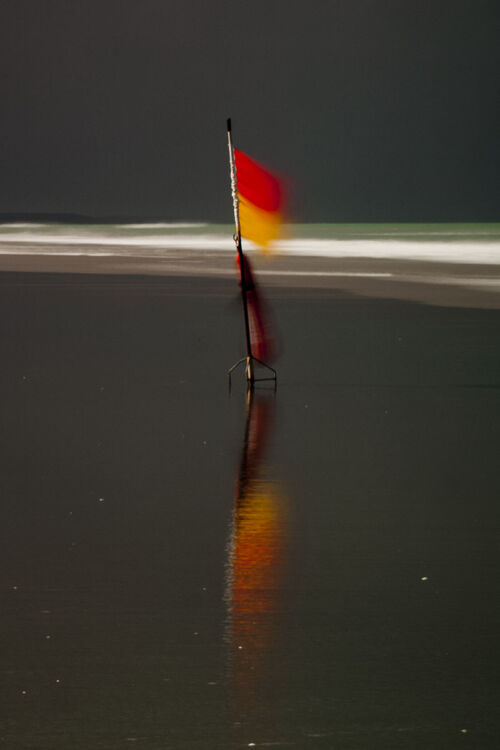
Study of Safety Flag
Price range: $132.30 through $456.30
-
 The Lights
Price range: $132.30 through $456.30
The Lights
Price range: $132.30 through $456.30


© 2007 - 2026 • GoldingArts • All Rights Reserved • Privacy Policy • Terms and Conditions