
Before the storm the boats lay still in Oamaru Harbour.
A digitally painted piece showing the dramatic clouds minutes before sunset in this beautiful location.
European settlement at Oamaru began in 1853 when Hugh Robison built a musterer’s hut on the foreshore. North Otago was good for sheep-runs, and in the 1860s the town grew rich servicing pastoralists and gold miners.
Oamaru, though, was no port. Cape Wanbrow, a stubby little headland, gave some shelter from southerly winds but none from easterlies. In the absence of breakwaters and wharves, ships anchored in the open sea, loading and discharging cargo into surf boats. It was slow, sweaty work.
It was also dangerous. Cables guided the surf boats through the breakers in a hair-raising surge of foam. Once on the beach, the boat crews sledged them up to a cargo shed. Passengers received similar treatment. As the boats approached the beach, boatmen waded out, took the passengers on their backs and carried them ashore.
This was possible only in fine, calm weather. Ships’ captains kept a weather eye on the horizon. At the first sign of danger or a shift in the wind, work stopped and they fled out to sea.
Oamaru’s exposed beach made it one of New Zealand’s most dangerous anchorages. More than 20 ships were wrecked there between 1860 and 1875, and many more were damaged and recovered. In the worst example, on the night of 3–4 February 1868, a huge storm wrecked a new jetty foolishly built out into the bay from an unprotected site, as well as the ships Star of Tasmania, Water Nymph and Otago. Four people drowned.
'Oamaru Harbour', URL: https://nzhistory.govt.nz/culture/oamaru-harbour, (Ministry for Culture and Heritage), updated 20-Dec-2012

During daylight the Church of the Good Shepherd offers stunning views across Lake Tekapo to the distant mountains.

Oamaru's beautiful stone buildings are miniature worlds, each wall is inhabited by flora and fauna that started to colonize the rock as soon as the blade cut and the face was open to the elements.
Here we have the side of Steampunk HQ, moss and plants flow along the lines of moisture created by old and damaged spouting.

Gibraltar Rock, nestled in the Port Hills near Christchurch, at sunset. Atop the rock a lone figure stands with arms outstretched, warmed by the last rays.
This shot was planned well in advance, hoping for a clear day during a narrow window of opportunity, we managed to capture the sunset at just the right moment.
A break in heavy fog lights up a wave from a distant sunrise at the Oamru Breakwater, Oamaru Harbour.
Captured at 1/1600th of a second the water appears to shatter like glass against the stone.
A break in heavy fog lights up a wave from a distant sunrise at the Oamaru Breakwater, Oamaru Harbour.
Captured at 1/1600th of a second the water appears to shatter like glass against the stone.

Penny Farthings abound in Oamaru. One of the highlights of the year is the Penny Farthing race held during the Victorian Heritage Celebrations in November of each year.
Be sure to have a photograph taken outside the Whitestone Civic Trust building on the Ordinary cycle (Penny Farthing) outside the front door when you visit!
"That Wanaka Tree", an iconic spot that is photographed by thousands of tourists every year.
This artwork is digitally painted, showing the tree and the distant mountains awaiting a spring storm.
The old ANZ building in Christchurch, sadly damaged in the 22 February 2011 earthquake, was demolished.
When I moved to Christchurch, I lived in the backpackers across the street for a month and used to visit the Inspirations rock and crystal shop at the street level of this building. Towards the end of summer days the sun used to light the top floor tower whilst the streets below were in deep shadow.
The is a stitched panorama, in the original larger size you can see a sparrow coming in to land at close to the top window.
This image is also available as an A4 to A0 print.
Behind Jacksons Pub in Otira a dark path winds up into the native forest.
after a half hours walk you come to a glade filled with the sound of water. A beautiful waterfall cascades down from the mountain side into a dark pool. A rock appears to block the entrance to a cave behind the pool keeping us out.... or keeping something in?
Two lights, one at the end of the Breakwater, one at the end of Holmes Wharf stand as sentinels in the night guiding the lonely sailor back into Oamaru Harbour to safety.
The Lindis Pass, beautiful mountains rise above the thin ribbon of a road stretching out on it's journey into the distance.
Digitally painted by Derek Golding, the beautiful warm colours will compliment any room.

The Lindis Pass, beautiful mountains rise above the thin ribbon of a road stretching out on it's journey into the distance.
Digitally painted by Derek Golding, the beautiful warm colours will compliment any room.
A break in heavy fog lights up a wave from a distant sunrise at the Oamru Breakwater, Oamaru Harbour.
Captured at 1/1600th of a second the water appears to shatter like glass against the stone.

A digital painting by Derek Golding.
A road stretches home in the back country high above Otematata, North Otago. Nor-wester weather brings about some spectacular lighting in these locations.

An old shearer's hut stands facing the elements in North Otago.
Digitally painte,d this image brings out hidden colours within the scene.
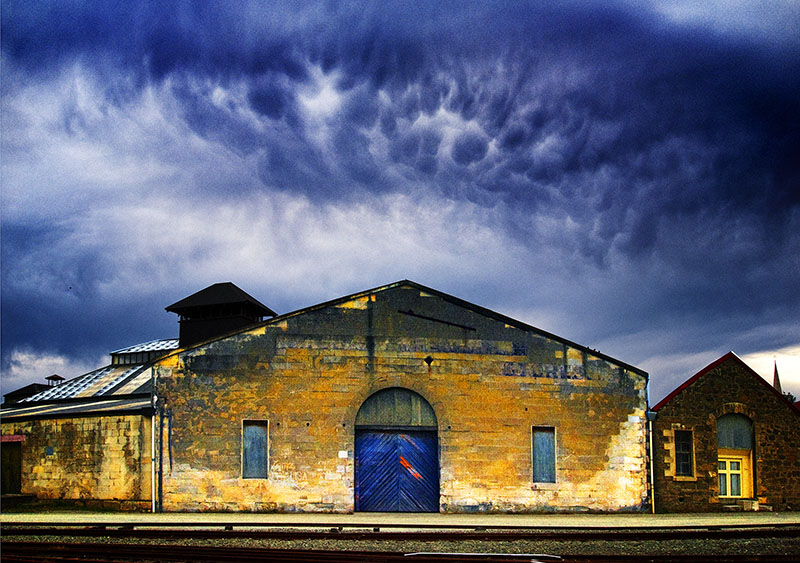
Being close to the sea and a landmass like the cape provides the artist with some stunning cloud formations.
Here we see Mammatus clouds billowing up above the rear facade of a building on Harbour street.
A tilt Shift effect is used to create a toy town!
Oamaru as seen from Forrester Heights, the hill overlooking Oamaru on Cape Wanbrow.





GoldingArts
Be sure to follow our social pages for offers and updates.
Popular products
Featured products
-
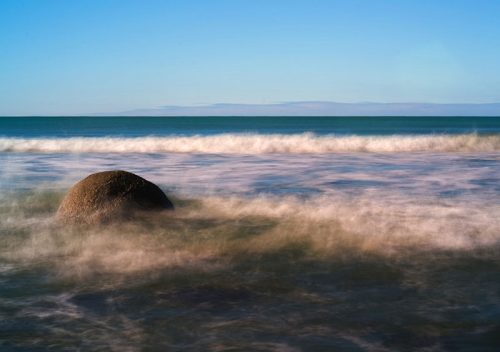
 Moaraki Boulder
Price range: $105.30 through $456.30
Moaraki Boulder
Price range: $105.30 through $456.30 -
Toy Town Oamaru I
Price range: $132.30 through $456.30
-
 Rainbow number 1
Price range: $132.30 through $456.30
Rainbow number 1
Price range: $132.30 through $456.30


© 2007 - 2026 • GoldingArts • All Rights Reserved • Privacy Policy • Terms and Conditions